
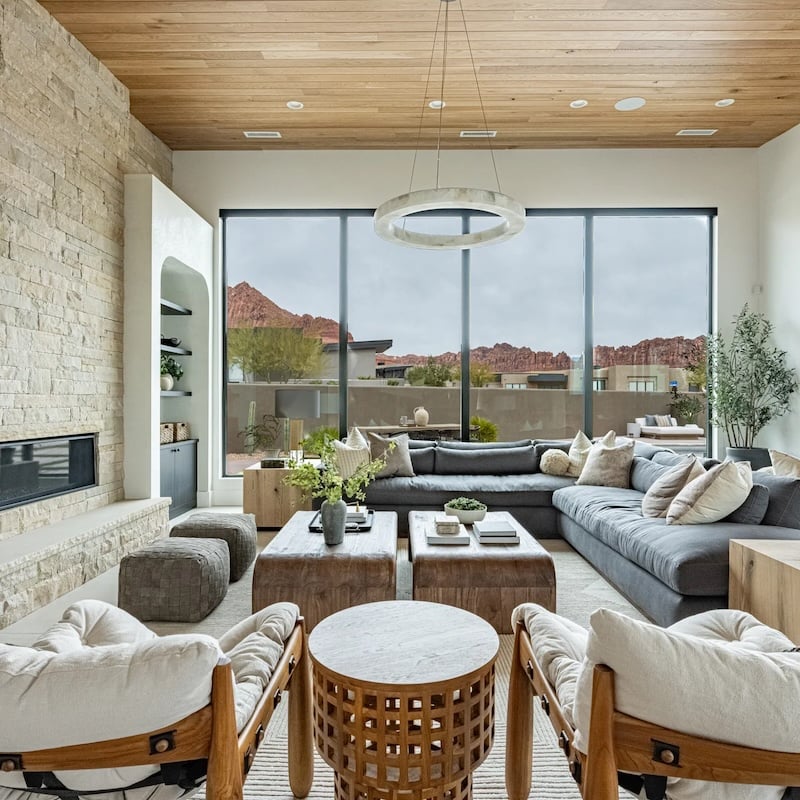
When a home is surrounded by a landscape as striking as the red rocks of the Southwest, the view becomes one of the most important elements of the design. Rather than competing with the natural beauty outside, we want the interiors to feel connected to their surroundings, bringing the colors, textures, and warmth of the landscape indoors. In our Autumn Lane Project, the red rock backdrop helped guide everything from our material selections to our color palette and window placement. The result is a home that feels grounded in its setting, with a timeless, organic aesthetic that lets the landscape take center stage.
Let the Landscape Lead the Color Palette
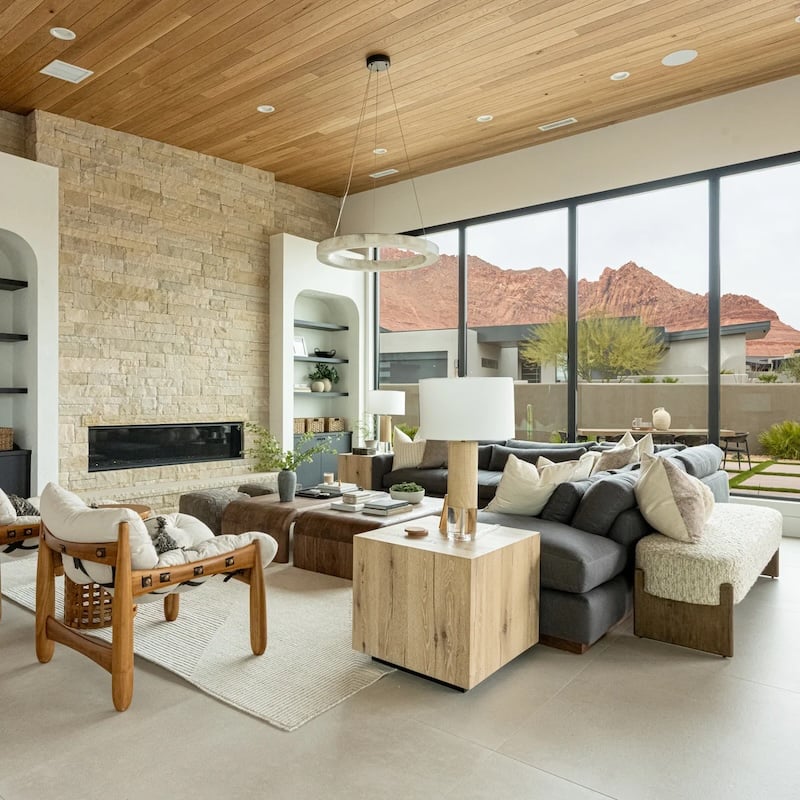
One of our favorite ways to create a cohesive home is to look to the environment for color inspiration. The rich rust, warm terracotta, sandy beige, and muted taupe tones of the red rock landscape provided a natural starting point for Autumn Lane. Rather than introducing colors that compete with the scenery, we leaned into a palette of warm neutrals, earthy undertones, and subtle contrasts that complement the views beyond the windows.
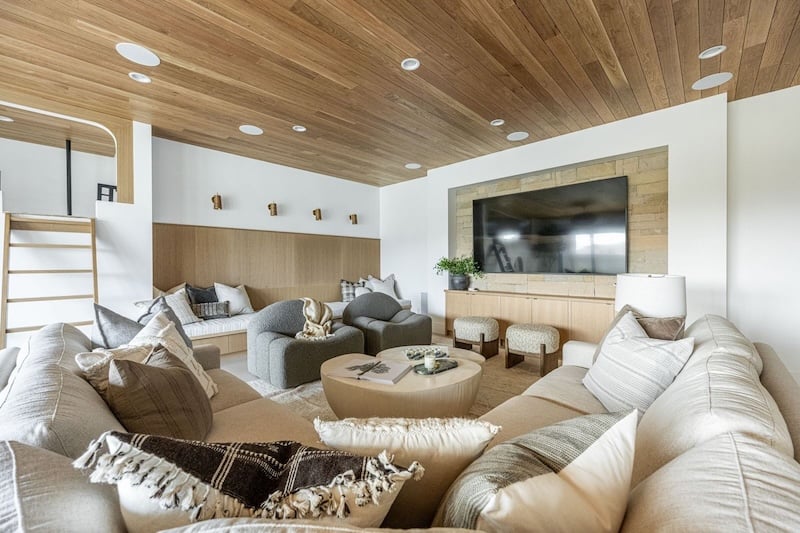
Creamy whites and soft warm tones help keep the interiors feeling light and open, while deeper wood finishes and darker accents add definition. These colors create a beautiful transition between the home and its surroundings, allowing the red rock formations to feel like a natural extension of the interior palette. The goal is not to match the landscape exactly, but to create a thoughtful relationship between the colors outside and the materials inside.
Choose Materials That Feel Organic

When designing around a dramatic natural setting, texture is just as important as color. We love incorporating materials that feel authentic, tactile, and connected to the outdoors. Natural stone, warm wood, textured fabrics, and handcrafted finishes bring depth to a space without overwhelming it with unnecessary detail.

In Autumn Lane, the surrounding landscape inspires a more organic approach to material selection. Wood tones introduce warmth, stone adds a sense of permanence, and layered natural textures soften the architecture. These materials help balance the rugged beauty of the red rocks with interiors that feel comfortable and inviting.

We also look for finishes that will age beautifully. Natural materials often have subtle variations in tone and texture, giving a room character without requiring a lot of extra decoration. When the landscape already offers so much visual interest, a restrained mix of materials can make a much stronger statement than an abundance of competing finishes.
Frame the View With Thoughtful Sightlines

A beautiful view deserves to be part of the experience of living in a home. One of the most important considerations when designing around the landscape is how the scenery is revealed as you move through the space. Windows, doorways, furniture arrangements, and architectural details all play a role in shaping what you see from different vantage points.
For a setting like Autumn Lane, we want the landscape to feel present throughout the home, not just when standing directly in front of a window. Large windows and carefully considered openings can draw the eye outward, while open sightlines help the interior feel connected to the expansive scenery. Whenever possible, we consider the views from the main living areas, kitchen, dining spaces, and primary suite so that the surrounding landscape becomes part of everyday life.

Furniture placement matters, too. We like to arrange seating to encourage conversation while still allowing the view to remain a focal point. Low-profile furnishings, thoughtfully positioned accessories, and uncluttered window areas help preserve those visual connections. The goal is to make looking outside feel effortless, whether you’re enjoying a quiet morning coffee or gathering with family and friends.
Create a Seamless Indoor-Outdoor Connection

When the scenery is this beautiful, the transition between indoors and outdoors should feel natural. A strong indoor-outdoor connection begins with a consistent design language. Repeating warm wood tones, earthy colors, and natural textures in both spaces helps the home feel cohesive, while generous openings can make patios and outdoor living areas feel like an extension of the interior.

We also consider how the light changes throughout the day. Natural light brings out the subtle variations in stone, wood, and fabric, giving interiors a sense of movement as the sun shifts across the landscape. Window treatments should offer privacy and light control when needed without unnecessarily obscuring the views. Simple, understated treatments are often the best choice when the scenery itself provides so much beauty.

Outdoor furnishings and finishes can reinforce this connection. Rather than introducing a completely different palette outside, we prefer materials and colors that complement the home’s interior and the surrounding terrain. The result is a more fluid experience that makes the most of the setting.
Design for the Setting, Not Just the Floor Plan
The most successful homes feel as though they belong exactly where they are. In the Autumn Lane Project, the red rock landscape offers more than a beautiful backdrop; it helps establish the home’s identity. Its colors inform the palette, its textures inspire material choices, and its scale encourages thoughtful sightlines that bring the outdoors into daily life. Want the nature outside your home to become the statement? Shop our Autumn Lane Project to recreate a similar vibe.
Xxo
Becki
Get the Look


